Saturday, November 26, 2011

Pavo Paseo y Dia de Gracias - Friday November, 25, 2011:

                This week was chock full of classes, including two double days. We focused on the fundamental rights of companies and the boondoggle of international tax law, all in pursuit of learning about contracts and the law applicable to them. Despite the heavy load, being the good little ex-pats we currently are, the most important part of this past week was Thanksgiving. Jenny graciously offered to host our celebration and so on Thursday, six Americans, a Brazilian, a Brit and an Irish gathered round to give thanks. For being so far from home, we did pretty well. Neal found turkey at Corte Ingles, the biggest grocery store near us; Kristen made stuffing; Jessica made corn bread sans cornmeal; and Jenny made stuffed mushrooms. Alan searched and searched for pumpkin or pumpkin pie, but ended up bringing a delicious cheesecake.
                Personally, I had decided Thanksgiving wasn't Thanksgiving unless there was cranberry sauce. This was an ambitious decision because cranberries are rare here. I was hoping Corte Ingles would have canned cranberry sauce. No such luck, but I did find dried cranberries at a small fruteria. As I was buying them, the little old lady in line behind me asked what they were. "Arandanos rojos", I replied - which literally translates to red blueberries, the word in Spanish for cranberry. She still seemed very confused, and asked to try one. They were sold in bulk, so I let her. She continued to look puzzled after she tried it, but finally shrugged her shoulders and thanked me. I took another visit back to Corte Ingles and found fresh cranberries in the exotic foods section. They were imported from the USofA and cost 4 euros - an exorbitant amount for the teeny container they came in. Nonetheless, I bought one package figuring they could only enhance the dried ones I was planning to reconstitute. So on Thanksgiving day, I played in my kitchen, optimistically soaking the dried cranberries and guestimating metric amounts. In the end, my cranberry sauce was delicious and Thanksgiving safely carried on. Though, I did miss cutting apart the can shape to serve myself.


Frank Gehry themed wine from La Rioja and soon to be delicious stuffed mushrooms.

Prepping in Jenny's kitchen. This is my "Happy Thanksgiving!!!" face.
Chatting before dinner.

I believe that here Jess is indoctrinat--I mean, educating the foreigners on Thanksgiving.
Success!! and by that I mean yummmmmmmmmmmmmmm.

Chowing down.
The whole group.

                I'm also happy to say that my personal turkey trot tradition also carried on, infused with a Spanish twist. Early Thanksgiving morning, Jenny and I went hiking in the beautiful hills surrounding Bilbao, which were unfortunately fogged in that day. But, the "Pavo Paseo" was altogether successful and we ended it at our favorite bakery sharing a brownie and cafe con leche. And although I missed my family and friends at home, it really was a happy Dia de Gracias.


A foggy Thanksgiving day in the hills around Bilbao.

But a lovely Thanksgiving day nonetheless.

Jenny and I "Pavo Paseo-ing" our bums off.

Monday, November 21, 2011

A Bit of Basque Country in Madrid (with Toledo, Avila, Segovia and Salamanca on the way!) – Sunday, November 20, 2011:


            This week started out studying the Rome I regulation, which dictates choice of law during litigation in the European Union. Each class, I'm reminded of the different legal necessities of Europe vs. the US, and this class was no different. Again, the civil system and the inherently, unavoidably transnational qualities of the European system seep into every aspect of the laws we study and the very basics of everything I learned in American law school is slightly shifted.

                We had a few days off this week, so my friend Alan and I headed off to check out Madrid. Aside from the areas closer to Bilbao, like La Rioja and San Sebastian, I had yet to check out the rest of Spain. So, off to Madrid we went to pay our respects to the King and Queen.

                We arrived by bus and took the Metro to Plaza del Sol. Immediately upon exiting the Metro stop, I could feel the pulsing energy of the capital city. Madrid was alive and bustling, with people walking in every direction, street performers, knock off bag sellers, statutes, fountains, stores, and even a fake Mickey mouse. The energy of the big city engaged me, providing a dramatic contrast to the subdued vibe of Bilbao. It made me miss San Francisco, appreciate city life and wonder what my time abroad would have been like if I had lived in Madrid. Probably, I would have never wanted to leave.


Puerta del Sol in Madrid, where we exited the Metro.

The oldest building in Plaza Mayor.

To be added to my photo bomb hall of fame (in front of the Royal Palace in Madrid)

Another plaza in Madrid, viewed from a rooftop bar.

The symbol of Madrid - a bear under a madrone tree - in statue form in Puerta del Sol.

                Alan and I wandered around, enjoying the food, the diversity, the Starbucks and the culture. We spent a day at the Prado, Madrid's huge art museum, and admired the works of Goya, El Greco, Raphael, and more. I particularly loved Rubens' work, and spent extra time admiring his definition of beauty. After the Prado, we quickly visited the Sofia Reina, the modern art museum built in a converted hospital to house Picasso's "Guernica".  This masterpiece painting was inspired by the bombing of the small Basque town of Guernica during Franco's reign, with assistance from Hitler. Picasso intended it to reflect the pain, severity and damage of war, and it is famous world round as an anti-war symbol. After touring it extensively, Picasso left the painting in the care of New York City's MoMa, on the condition it be returned to Spain after Franco's death and Spain was once again a republic. The painting was finally returned in the 80s and it is a great testament to the turmoil and despair of the Spanish civil war. I must admit I'm not the biggest of art fans - I often feel it’s a bit over my head. But, I could have stared at Guernica for hours, never tiring and never ceasing to find new aspects of the painting, new emotions Picasso conveyed, new perspectives to admire. It is truly a masterpiece, and made me feel simultaneously inspired, angry, grievous and pained - like only the best art can.

                The rest of the weekend included a whirlwind tour of Central Spain. We visited historic Toledo, the maze of El Escorial, the beautiful, ancient wall at Avila, the awe-inspiring Roman aqueduct in Segovia and the sandstonerific Salamanca. Each site was more beautiful and more grandiose than the last, but by the end of it all my neck hurt from gazing upwards and I was feeling a bit cathedraled out. We drove back to Bilbao in a rental car through miles and miles of La Meseta before finally passing the mountain range that kept Basque country separate for many years, arriving home in Bilbao.


The river outside Toledo, which is on the right on top of the hill.

Toledo viewed from the bell tower of its cathedral.

The beautiful aqueduct in Segovia.

Plaza Mayor in Salamanca... find me in my green scarf!


Tuesday, November 15, 2011

Roadtrippin’ and Winetastin’ – Monday, November 14, 2011:


                Another week of classes clearly merited another weekend trip. So Jenny and I headed off to La Rioja, a famous wine making region of Spain, just south of Bilbao. Having adopted the Bay Area, USA as my home, I felt obliged to be a good Californian and appreciate the wine of my temporary home, Northern Spain. My California instincts were spot on - the landscape was stunning, the wine was delicious and the locals were gracious. Jenny and I rented a car and left town Friday after class. Road tripping made me feel uniquely at home, which was odd since I usually don't even like to drive. But I suppose driving is something I don’t usually do on vacation and this entire semester has felt, strangely, to be an unending vacation. Navigating the roads was an adventure in itself and made me realize how culturally based driving is. There were new road signs to learn, highway categorizations to depuzzle and roundabouts every 10 feet or so. But, we successfully found our way without even scratching the shiny rental … and only few u-turns.
                When we were in Burgos I realized fall was here, but in La Rioja, the season was unavoidably stunning. The landscape was mixed - alternately mountainous and rocky, sometimes flat for miles around. But it was all covered with grape vines changing color in the brisk fall and the entire countryside was blanketed in red, yellow, and orange. I grew up in Upstate NY and am used to the beauty of trees in fall, but I'd never seen anything like the patchwork quilt created by changing vines. The weather in La Rioja is extreme - very hot in the summer and snowy in winter. But these extremes help them grow fantastic grapes, including the tempranillo for which they are famous. Speckled among the vineyards are tiny, quaint medieval towns with cobblestone streets, requisite cathedrals and town plazas. Spaniards have been making wine in this region for centuries, and the multitude of vineyards ranged from small family-owned to large global exporters.

Jenny and our rental car in front of some beautiful scenery.

The patchwork of vineyards.


                Jenny and I started out at Miguel Merino vineyards where the very kind, jovial Miguel himself gave us a tour and hosted our tasting. Miguel, his son and three employees run the entire winery, and produce only 30,000 bottles per year, but they were decorated with awards and even export to KML Wines in San Francisco. Miguel teased us about being law students, as he himself was trained as a lawyer before becoming a wine salesman and eventually opening his winery. The love and passion he had for his craft were obvious; we thoroughly enjoyed his wine and made him promise to call when he visited San Francisco.

Jenny, Miguel and I
Miguel's aging wine.
 
                Throughout the weekend, we visited many other wineries and ended our visit at a vineyard on the other end of the spectrum from Miguel's. Marques de Riscal is a winery that produces millions of bottles per year and exports to over 100 countries. It recently opened a hotel designed by Frank Gehry, the architect of Bilbao's Guggenheim, and now the buildings on its property span three different centuries. The Gehry building was stunning against the vineyard, and the ancient town cathedral was framed by Gehry's characteristic twisting and turning eaves.

The Frank Gehry hotel at Marques de Riscal.


Vines set against the hotel.
Elciego's cathedral seen from the hotel.
Wine tasting at Marques de Riscal.

C'mon guys let's crack this thing open!
 
                After Marques de Riscal, we visited the wine museum where we learned about the wine making process throughout history, how barrels are built and how corks are made. It made me thoroughly appreciate the work of the winemakers and the production of the region, which was a fitting end as we hopped back in the car towards industrial Bilbao and another week of classes.

The entrance to the Wine Museum.

Tuesday, November 8, 2011

Little Culture Clashes and the Camino - Tuesday, November 8, 2011:

          Our second module started last week, with some of the best lecturers and topics yet. Ines Nunez de la Parte lectured on trading internationally and the basics of drafting international contracts. Many of the class' concepts reminded me of studying contracts in the States, but this class had a very real international aspect as European business contracts are rarely domestic. Professor Nunez de la Parte is General Counsel for Ingeteam, one of the biggest companies in Basque Country, so she had a great deal of real life experience to share with us. The lessons and anecdotes made her a great lecturer and it was a great class overall. 

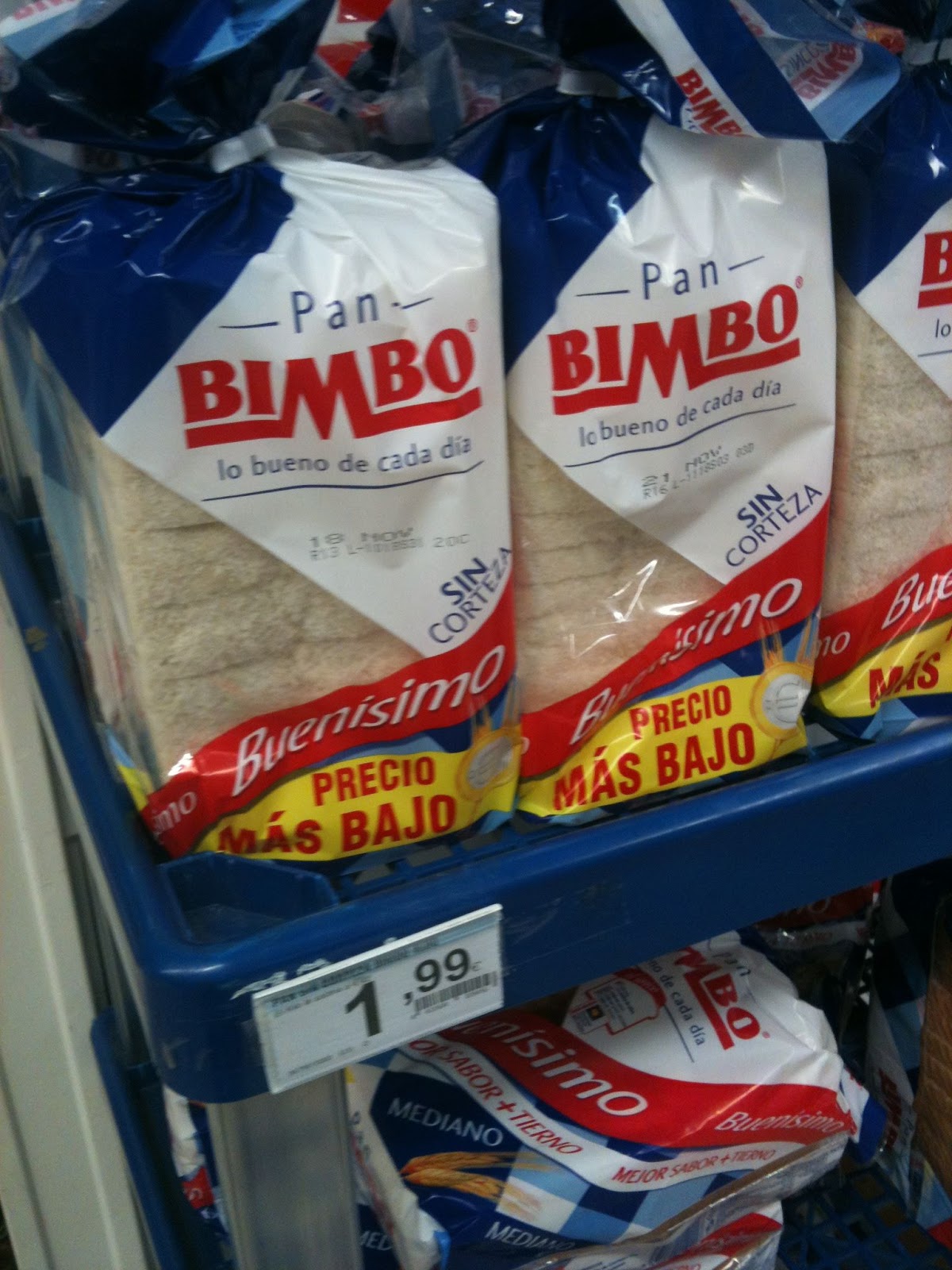
       Aside from classes, I spent the weekend mostly indoors trying to keep dry – monsoon-like rains poured throughout Bilbao from Saturday to Monday and it made me want to curl up in bed with a book. And, for most of the weekend, I did. I eventually rallied and did venture out to the grocery store - which is actually one of my favorite cultural experiences. When I travel, I always love the moments that make me think “I’m definitely not in the States right now.” These moments happen all over, of course, but many of them – and most of my favorites – happen in the grocery store. See exhibits below:

The Nutella Section in the Store: note the lone jars of peanut butter up top.

The peanut butter is American themed.

teehee.

Ok, this could be done in the States, too, but it makes me giggle. That's greek yogurt.

No, bad milk is not sexy, but apparently this wigged out cat is.


Share? What? in the States, 2 free donuts would not mean sharing.... (The sign essentially translates to "Who are you going to invite to share with?")
This is just not appetizing to me ... and note that its called the "rape" fish.

And a few more non-grocery store culture clashes:

Excuse the bad picture - I took it on the subway, but the sign is an aspirin and translates to "Avoid headaches, Consult with your lawyer." ... I'm pretty sure that's not the reputation lawyers have in the States...

Somehow I don't think this ad campaign would work in the States... there are other signs with elephants, birds and other animals "doin' their thang".
Stag parties... ha, enough said, I think...
Ok, this is not in Spain. But, I love it nonetheless.
Funny English translations... would you like some fried varied for lunch?
Topless beach going...
Dogs inside restaurants...
Books in vending machines.


y mas! Oh, how I love the little nuances. 

          On Tuesday the rain finally cleared so Jenny, Kristen and I took a day trip to Burgos, which is about an hour and a half south of Bilbao. Burgos is on the Camino del Santiago, a famous pilgrimage route recently made famous-er by Martin Sheen. Back in the day, a cathedral was built over the remains of St. James, Spain’s patron saint, and people from all over started making pilgrimages to visit. There are actually five different routes and the “Northern Route” runs straight through Bilbao, a few blocks from my house in Casco Viejo. But, the most traditional route is the “French Way” which starts in the Pyrenees, crossing through Pamplona, Navarra, La Rioja and Leon before finally reaching the cathedral in Santiago de Compostela. The entire route is 780 km (around 500 miles) and thousands of pilgrims still walk it, bike it, or horseride it today. The entire route is clearly marked with scallop shells so that pilgrims claim they don’t even need a map. We easily found the route in Burgos and traversed along it for about an hour, enjoying the beautiful fall scenery and the ancient tradition.

The City Wall and the Cathedral beyond it in Burgos.

A sign indicating how much of the Camino is left.
Shells pointing out pilgrims are still on the Camino.

More Shells.
Mas Shells.

and an arrow pointing the way.

All on a beautiful fall day in Burgos!