Tuesday, November 15, 2011

Roadtrippin’ and Winetastin’ – Monday, November 14, 2011:


                Another week of classes clearly merited another weekend trip. So Jenny and I headed off to La Rioja, a famous wine making region of Spain, just south of Bilbao. Having adopted the Bay Area, USA as my home, I felt obliged to be a good Californian and appreciate the wine of my temporary home, Northern Spain. My California instincts were spot on - the landscape was stunning, the wine was delicious and the locals were gracious. Jenny and I rented a car and left town Friday after class. Road tripping made me feel uniquely at home, which was odd since I usually don't even like to drive. But I suppose driving is something I don’t usually do on vacation and this entire semester has felt, strangely, to be an unending vacation. Navigating the roads was an adventure in itself and made me realize how culturally based driving is. There were new road signs to learn, highway categorizations to depuzzle and roundabouts every 10 feet or so. But, we successfully found our way without even scratching the shiny rental … and only few u-turns.
                When we were in Burgos I realized fall was here, but in La Rioja, the season was unavoidably stunning. The landscape was mixed - alternately mountainous and rocky, sometimes flat for miles around. But it was all covered with grape vines changing color in the brisk fall and the entire countryside was blanketed in red, yellow, and orange. I grew up in Upstate NY and am used to the beauty of trees in fall, but I'd never seen anything like the patchwork quilt created by changing vines. The weather in La Rioja is extreme - very hot in the summer and snowy in winter. But these extremes help them grow fantastic grapes, including the tempranillo for which they are famous. Speckled among the vineyards are tiny, quaint medieval towns with cobblestone streets, requisite cathedrals and town plazas. Spaniards have been making wine in this region for centuries, and the multitude of vineyards ranged from small family-owned to large global exporters.

Jenny and our rental car in front of some beautiful scenery.

The patchwork of vineyards.


                Jenny and I started out at Miguel Merino vineyards where the very kind, jovial Miguel himself gave us a tour and hosted our tasting. Miguel, his son and three employees run the entire winery, and produce only 30,000 bottles per year, but they were decorated with awards and even export to KML Wines in San Francisco. Miguel teased us about being law students, as he himself was trained as a lawyer before becoming a wine salesman and eventually opening his winery. The love and passion he had for his craft were obvious; we thoroughly enjoyed his wine and made him promise to call when he visited San Francisco.

Jenny, Miguel and I
Miguel's aging wine.
 
                Throughout the weekend, we visited many other wineries and ended our visit at a vineyard on the other end of the spectrum from Miguel's. Marques de Riscal is a winery that produces millions of bottles per year and exports to over 100 countries. It recently opened a hotel designed by Frank Gehry, the architect of Bilbao's Guggenheim, and now the buildings on its property span three different centuries. The Gehry building was stunning against the vineyard, and the ancient town cathedral was framed by Gehry's characteristic twisting and turning eaves.

The Frank Gehry hotel at Marques de Riscal.


Vines set against the hotel.
Elciego's cathedral seen from the hotel.
Wine tasting at Marques de Riscal.

C'mon guys let's crack this thing open!
 
                After Marques de Riscal, we visited the wine museum where we learned about the wine making process throughout history, how barrels are built and how corks are made. It made me thoroughly appreciate the work of the winemakers and the production of the region, which was a fitting end as we hopped back in the car towards industrial Bilbao and another week of classes.

The entrance to the Wine Museum.

Tuesday, November 8, 2011

Little Culture Clashes and the Camino - Tuesday, November 8, 2011:

          Our second module started last week, with some of the best lecturers and topics yet. Ines Nunez de la Parte lectured on trading internationally and the basics of drafting international contracts. Many of the class' concepts reminded me of studying contracts in the States, but this class had a very real international aspect as European business contracts are rarely domestic. Professor Nunez de la Parte is General Counsel for Ingeteam, one of the biggest companies in Basque Country, so she had a great deal of real life experience to share with us. The lessons and anecdotes made her a great lecturer and it was a great class overall. 

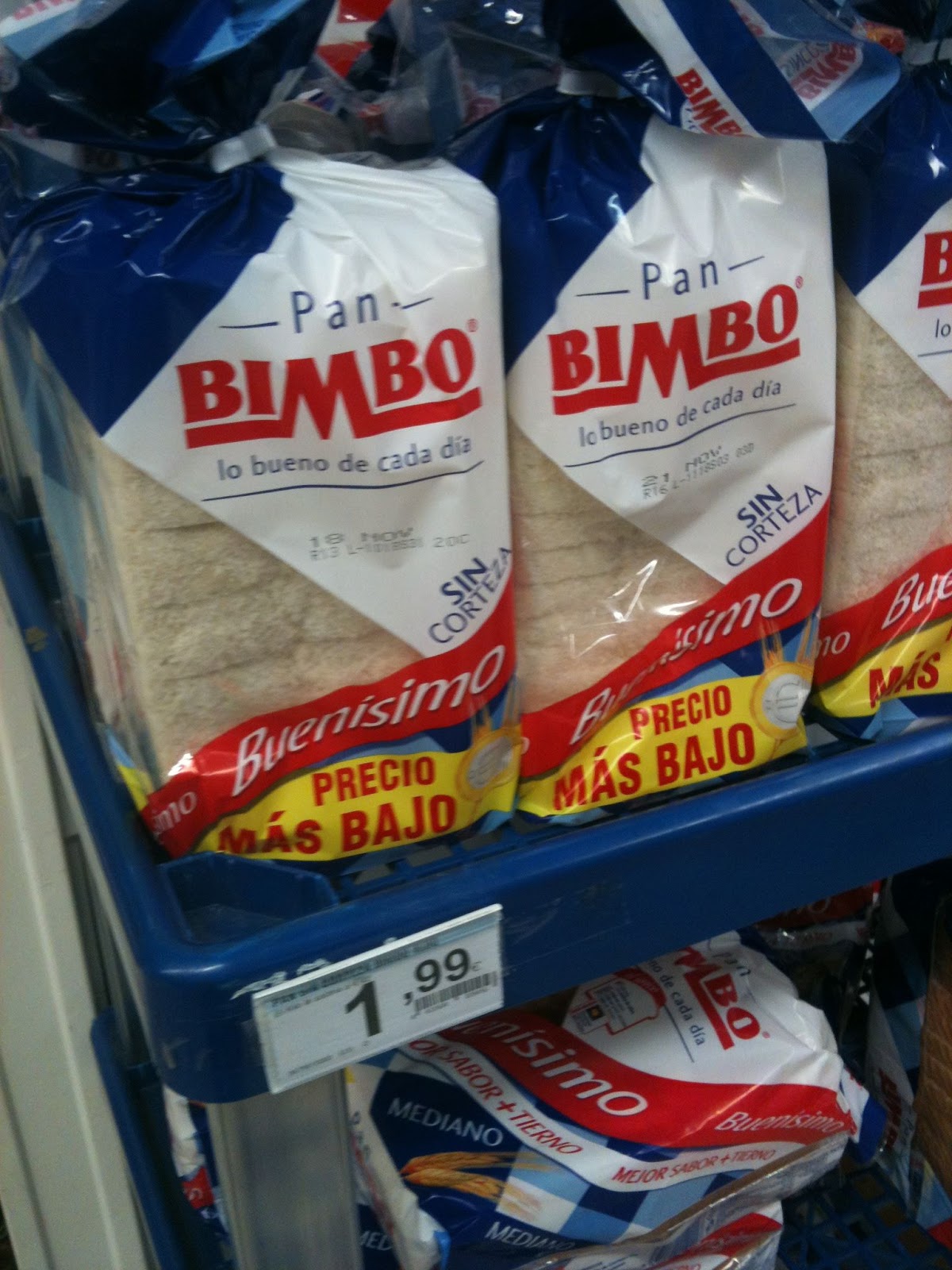
       Aside from classes, I spent the weekend mostly indoors trying to keep dry – monsoon-like rains poured throughout Bilbao from Saturday to Monday and it made me want to curl up in bed with a book. And, for most of the weekend, I did. I eventually rallied and did venture out to the grocery store - which is actually one of my favorite cultural experiences. When I travel, I always love the moments that make me think “I’m definitely not in the States right now.” These moments happen all over, of course, but many of them – and most of my favorites – happen in the grocery store. See exhibits below:

The Nutella Section in the Store: note the lone jars of peanut butter up top.

The peanut butter is American themed.

teehee.

Ok, this could be done in the States, too, but it makes me giggle. That's greek yogurt.

No, bad milk is not sexy, but apparently this wigged out cat is.


Share? What? in the States, 2 free donuts would not mean sharing.... (The sign essentially translates to "Who are you going to invite to share with?")
This is just not appetizing to me ... and note that its called the "rape" fish.

And a few more non-grocery store culture clashes:

Excuse the bad picture - I took it on the subway, but the sign is an aspirin and translates to "Avoid headaches, Consult with your lawyer." ... I'm pretty sure that's not the reputation lawyers have in the States...

Somehow I don't think this ad campaign would work in the States... there are other signs with elephants, birds and other animals "doin' their thang".
Stag parties... ha, enough said, I think...
Ok, this is not in Spain. But, I love it nonetheless.
Funny English translations... would you like some fried varied for lunch?
Topless beach going...
Dogs inside restaurants...
Books in vending machines.


y mas! Oh, how I love the little nuances. 

          On Tuesday the rain finally cleared so Jenny, Kristen and I took a day trip to Burgos, which is about an hour and a half south of Bilbao. Burgos is on the Camino del Santiago, a famous pilgrimage route recently made famous-er by Martin Sheen. Back in the day, a cathedral was built over the remains of St. James, Spain’s patron saint, and people from all over started making pilgrimages to visit. There are actually five different routes and the “Northern Route” runs straight through Bilbao, a few blocks from my house in Casco Viejo. But, the most traditional route is the “French Way” which starts in the Pyrenees, crossing through Pamplona, Navarra, La Rioja and Leon before finally reaching the cathedral in Santiago de Compostela. The entire route is 780 km (around 500 miles) and thousands of pilgrims still walk it, bike it, or horseride it today. The entire route is clearly marked with scallop shells so that pilgrims claim they don’t even need a map. We easily found the route in Burgos and traversed along it for about an hour, enjoying the beautiful fall scenery and the ancient tradition.

The City Wall and the Cathedral beyond it in Burgos.

A sign indicating how much of the Camino is left.
Shells pointing out pilgrims are still on the Camino.

More Shells.
Mas Shells.

and an arrow pointing the way.

All on a beautiful fall day in Burgos!

Tuesday, November 1, 2011

Staycation and items “americanas” - Tuesday, November 1, 2011:


                Orientation for our next module – “Contracts and the Law Applicable to Contracts in the European Union” – was this past Wednesday. There, we found out classes for this module would’t start for another week. Most of my friends immediately hopped on planes, but I decided to keep my tourism to Bilbao. I never ever ever thought I'd hear these words come out of my mouth (or fingers) . . . but I'm getting a little tired of traveling (!!!). So, in light of that shocking revelation, I welcomed the chance to hang out in one place. Plus, there were things in Bilbao I've been wanting to do and see since my arrival. So, I spent the week having a staycation. I hiked through the hills surrounding Bilbao, took a cruise down the river to the industrial port, rode the funicular up to see the panoramic view, and visited the Museo de Bellas Artes de Bilbao. I was a little bit bored at times, but also happy to be relaxing, following an unplanned agenda and crossing items off my to-do list.

View of Bilbao from my hike.

Me on hike - note Guggenheim in background.
 

Remaining industrial ports outside of Bilbao.

The city of Plentzia, down the river, closer to the ocean from Bilbao.

The view of school, Deusto University, from the river boat.
The top of the funicular.

Jess and I on the funicular.


View of Bilbao from the top of the funicular.

Outside of Museo de Bellas Artes de Bilbao.

Piece of modern art inside the museum.
 
                Other than simply being the most relaxed tourist in Bilbao, Halloween was this past Monday. I didn't expect Spaniards to even know what Halloween was, but one of our local friends told us they had just started celebrating it in Bilbao a few years ago. It certainly wasn't a huge holiday, but I saw remnants all over town: themed goodies at bakeries, scary movies playing on tv and even a few costumed celebrants - both adults and children. At first I thought it was really odd that a country should celebrate an American holiday, but then I started thinking of the plethora of American music and movies and I supposed an American holiday was just another entertainment to import. In fact, many of the things coming from “America” are pretty hilarious. I’ve started compiling a list of the things called “Americana” in Castellano, or the Spanish language spoken in Spain. For example there is “Cinta Americana”, which literally means “American tape”. In American English this item is duct tape. Here are a few more favorites:

 “Ensalada Americana”, translation: “American salad” actually: cole slaw 

“Chaqueta Americana”, translation: “American jacket” actually: a blazer or tailored suit-like jacket.

“Cebollos Americanos”, translation: “American onions” actually: those fried onions you put on top of green bean casserole.
 
In discovering these words, I’m beginning to feel empathy for when my French friend was offended when I told her I was bringing “French toast” on our camping trip. But “French Toast” or “Toast Dipped in Egg and Fried” isn’t nearly as much fun as my favorite “Americana” item : “Barra Americana.” Aka, Strip Pole.

View of the item.

and the items named - shorted to "Americana" at H&M.
Halloween in Bilbao.

Decorations in the windows of a bakery.

Wednesday, October 26, 2011

Solving Cases and Culinary Adventures (aka "I ate pigeon.") - Tuesday, October 25, 2011:

                The Friday after I returned home from Israel, our second class’s module ended with two final exams: one theoretical and one practical. The theoretical exam asked us to discuss themes present throughout our studies of judicial cooperation. The practical exam consisted of two hypothetical questions and was closer to an American law school exam, but still distinctly European. Throughout my studies here, I’ve noticed that instead of “argue a case”, professors say “solve a case”. At first, I thought this was just a strange translation, but, especially after completing the practical exam, I now think it's an intentional word choice reflecting the difference between a civil law system and a common law system. In a civil law system, cases are decided solely around statutory interpretation. This means that answers to cases lie in legislation and you can actually “solve” a case by applying the statute. It’s akin to a mathematical equation, rather than the romantic diatribe of the common law system, where winning a case is dependent on finding the most authoritative and similar case law and then, convincing a judge your legal precedent and interpretation is best. I finally, truly understood this difference as I diligently “solved” the cases on our final, letting my common law head spin as I tried to juggle the various statutes defining the multiple slivers of the hypothetical.
                The rest of the weekend passed by slowly, and I spent a lot of time relaxing and enjoying being in one place. It was actually Restaurant Week in Bilbao, so on Monday night, Jess, Jenny, Neal and I decided to try an upscale, traditional Basque restaurant. Before I left for Spain, I was repeatedly told that Basque country has amazing food. But, especially after my time in Israel, I can't quite figure out where this amazing food is. So, I eagerly went to this upscale restaurant in hopes of finding it. Armed with high hopes, and picky only when it comes to meat, I joined my friends for dinner.
                I ended up eating pigeon. Yep, that’s right. I ate pigeon – on purpose. The menu – and I’m not sure why I hadn’t learned this lesson yet – was heavy on the ham, with some rabbit, dove and pigeon mixed in. Spaniards love their ham. Oftentimes the only sandwich offerings are (1) ham (2) ham with cheese (3) ham with egg and (4) red meat. I recently read that this cultural love of pig parts is a historical result. When the Spanish monarchy was forcing all Jews and Muslims to convert to Christianity or leave, many who converted were suspected to continue practicing in secret. So, the converts would take to the streets on their former Sabbath day and eat pig in public - hoping to indicate their loyalty to their new religion. And so even today, ham is literally everywhere and in everything. It’s thrown on top of tuna sandwiches, mixed in salads, hanging from walls of restaurants, and available at grocery stores where you can buy an entire pig leg, including the hoof. I don’t like red meat nor pork products, but ham is so omnipresent here that I’ve come to terms with the fact that if I order something, it might come with ham mixed in. And, if that's the case, I’m probably just going to eat it because it’s just too hard to avoid. Once, I tried to tell a waiter at a cafĂ© I frequent that I don’t like ham. “Que pena!” he declared. “What a shame!” and looked at me as if my lot in life must be rather unfortunate. This love of ham was particularly interesting on my flight from Madrid to Tel Aviv - from a pig guzzling country to a pig abstaining country. They served us a meal on the flight and it in there was a little card with a cartoon pig on it that said "No hay cerdo" - there's no pig. 
           

Typical Menu


Pig ads on a truck
Close up - above the little piggy's head it says "meat of the pig with out coloring or preservatives, flavor winner 2010"
A very common market item - leg of pig, including hoof.
         
         Luckily, I could avoid ham at the fancy basque restaurant. Optimistically and adventurously, I ordered the pigeon, figuring it couldn’t be too far from chicken. Sadly, I was wrong. Very, very wrong. The pigeon was dark, gray colored and gamey. The sauce on top was sweet with port and thick like gravy, which was just all too much – too heavy, too earthy, too sickly sweet. And so, the search for amazing Basque food continues.

Jess got adventurous with pheasant

I lost some optimism when my pigeon arrived...