Sunday, October 9, 2011

Obrigada, Portugal! You are lovely! - Saturday, October 8, 2011:

                Another break from classes meant Jessica and I could steal away to Portugal for a quick visit. It wasn't a straight up break – we were supposed to use the time off from class to work on our group presentations - but I hustled to finish mine and freed up the days for mas aventuras.  Off to Lisbon we went, and stayed with a friend of Jessica's, which was lovely. Not only could we get a better glimpse of the local culture, but they were also simply wonderful people. Leah, Leah's mom, Milagros, and Leah's brother, Ricardo, became our host family for three nights. They were kind and welcoming - giving us tips on what to see in Lisbon, driving us around, and cooking us meals. They each spoke between three and four different languages, which lead to some funny moments as we sat around the dinner table and they tried to teach Jess and I bits of each. Homesickness has started to set in for me lately, and the familial encounters of sitting around a table, eating together soothed my soul.


Dinner with (from left to right) me, Jess, Leah, Ricardo, a Hungarian guest and Milagros.


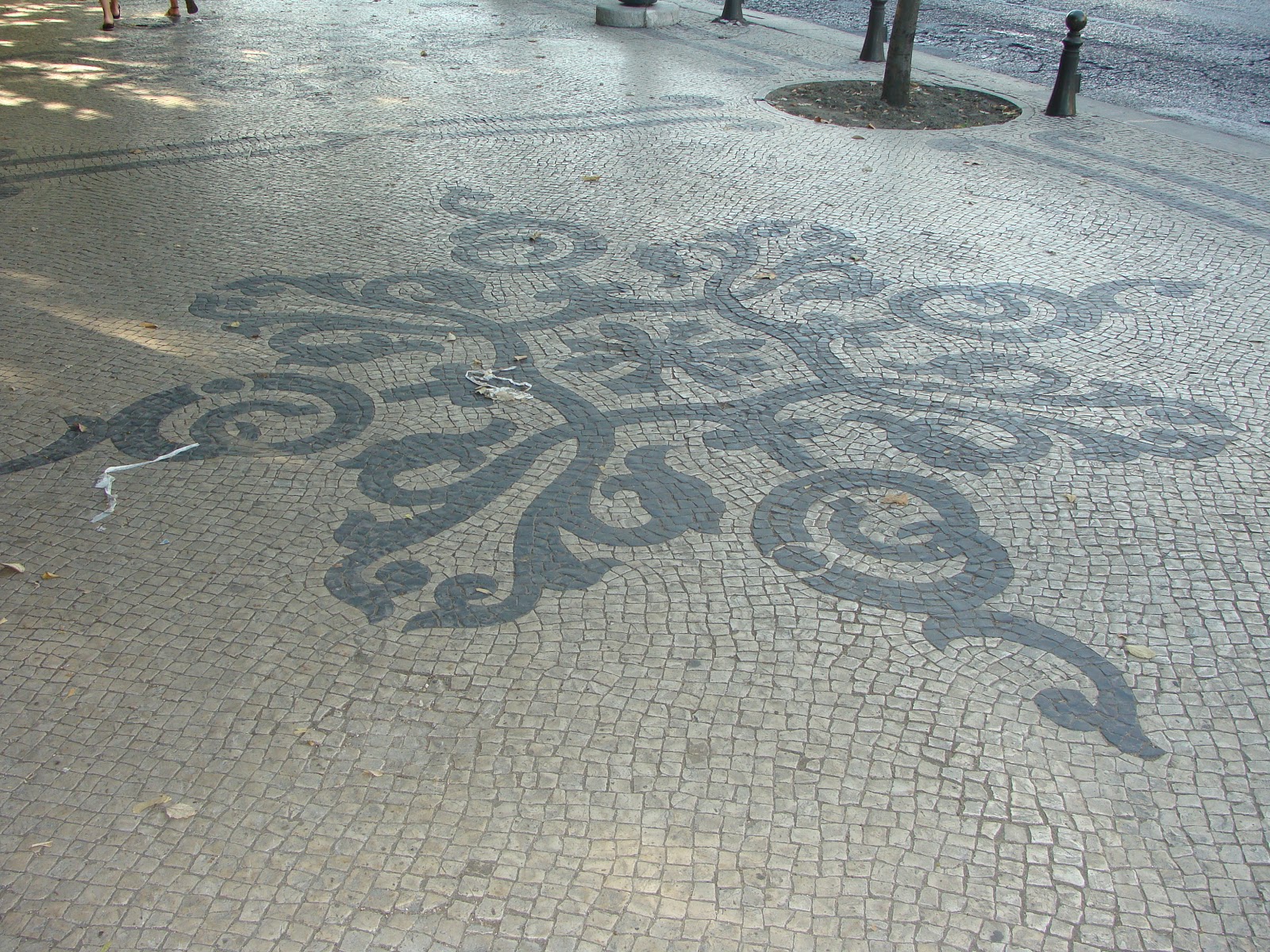
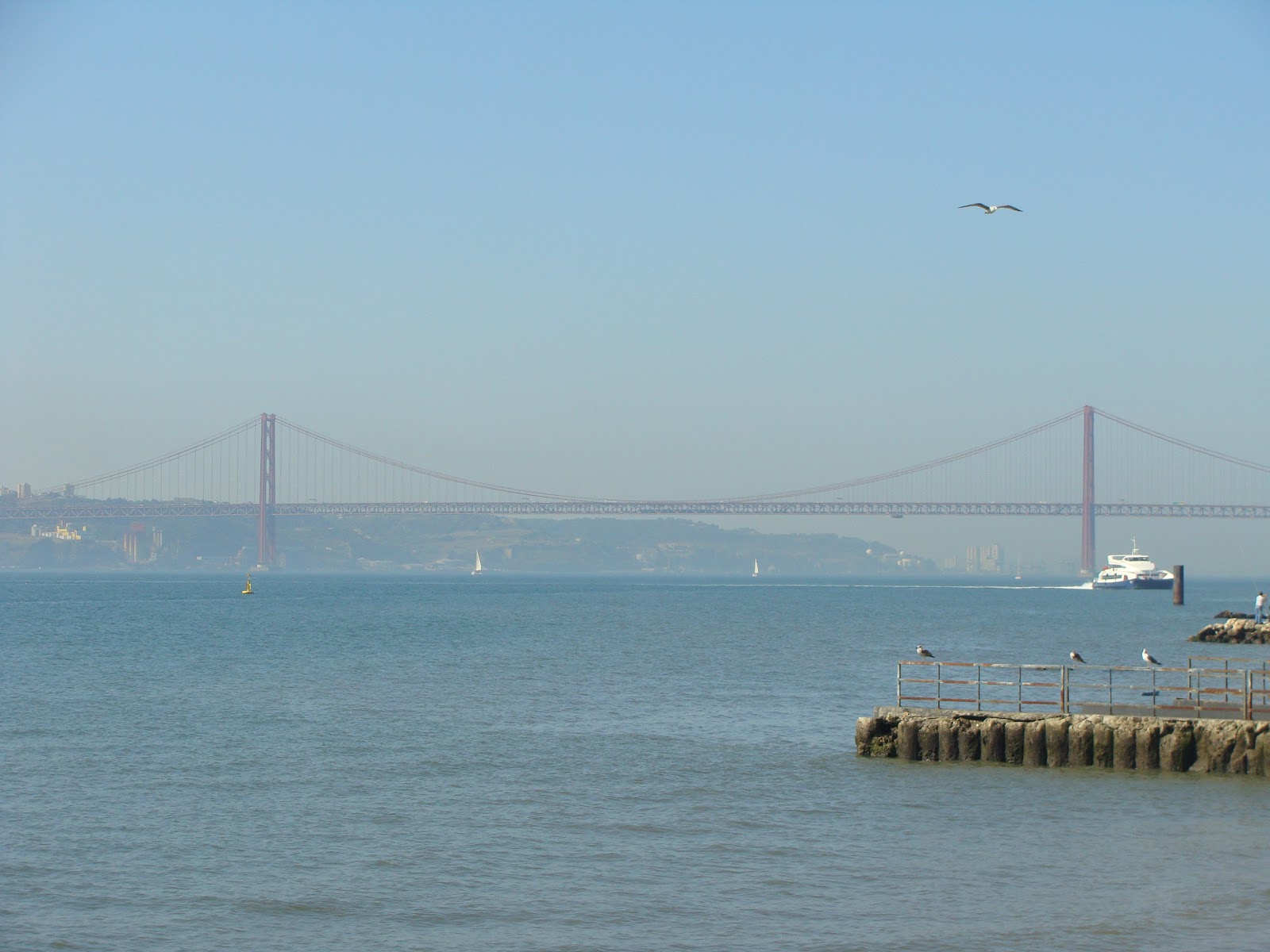
                We arrived to Portugal at 9am on Wednesday. Leah and her mom picked us up from the airport, and, wasting no time, Leah took us on a greatest hits tour of Lisboa, as it’s called in Portuguese. We walked all over the city, with Leah as our fabulous tour guide, and enjoyed the cultural sites. Lisbon was beautiful and relatively uncrowded. Buildings - inside and out - were decorated with ornate Portuguese tile, and I loved the colorful effect they gave the architecture. The streets and sidewalks were commonly paved with small cube stones that were like organized cobblestones. They created beautiful designs, but were also crazy slippery and, as Milagros told us, horrible in both rain and high heels. We walked down one of the main boulevards to a plaza downtown to try traditional cherry liqueur, and Leah promptly had us tipsy at 10:30am. We walked off the buzz and later ate some traditional Portuguese food. Jess had duck with rice, and I enjoyed bacalao a bras - cod with potatoes sautéed in eggs. Bacalao (cod) is common in Portugal and Leah told me about a saying that ‘there are a thousand ways to cook bacalao in portugal’. Our tour continued and we saw all the main monuments - from the Santa Justa Elevator, which was designed to connect the highest and lowest parts of Lisbon, to the castle of Sao Jorge, set high above the city with beautiful views of the bay and river, to the 25 of Abril bridge which looked surprising like the Golden Gate. Having traversed the city, we went home exhausted and fell right asleep after a lovely dinner with Leah’s family.

The slippy "cobblestones" lining the sidewalk

The Golden Gate Bridge???? nah, Its the 25 of April Bridge.

Sample 1 of tiling on the outside of a building

Tiling from a distance

Sample 2 of tiling on the outside of a building

Tiling from a distance.

View from within the Santa Justa Elevator

View from on top of the Santa Justa Elevator

Leah and Jess about to enjoy lunch

The view from St. George Castle

The rooster portrayed in a quilt - it's a traditional Portuguese symbol representing luck, faith and justice.

Tiles decorating the inside of a building


                The next day had more sightseeing - the Museum, the Tower of Belen, the Oceanarium - all lovely. And - one of my favorite parts of the day - our stop at Starbucks. Yesssss … STARBUCKS. I'm ashamed to admit it, but I’m missing Starbucks. There aren't any in Bilbao, and no coffee equivalent really exists. But, what’s worse for me is that there isn't really a cafe culture in Bilbao. At home, cafes are one of my leading school survival mechanisms and I love to curl up with my books or my computer, sometimes good company, and a cup of coffee. I can pass hours in cafes at home, and it is something I honestly miss in Bilbao. So, in Belen on Thursday we stood in the line to purchase the famous Belen pasteis which are custard like cakes with a delicious crispy layered shell. We then brought them next door to Starbucks, ordered a latte and sat using the wifi for awhile. I have to admit, there was something soothing about its familiarity and it, too, helped scratch the itch that is homesickness.


Me with the Oceanarium mascot dude.

Leah and Jess waiting in line to buy Belem cakes.

yay starbucks!!

The Tower of Belen


                Our final day in Portugal, we traveled to the town of Sintra which was the country home of the Portuguese royalty and had beautiful mansions, forests, castles and gardens. We wandered around the small, touristy town, and admired its beauty. I was constantly amused by the apparent tendency of the Portuguese to overestimate time. For example, we were told that the Quinta da Regaleira would be a 10 minute walk from the bus stop; 5 minutes off the bus we were there. Later, we were told the Palacio da Pena was a 10 minute walk up a hill; in 3 minutes we were up the entire hill. A man told us it was a 15 minute walk to the train station; it took 10. Earlier in the week, Leah told us it would take 40 minutes on the metro to get to the Oceanarium; it took 20. Perhaps the Portuguese allow extra time for tourist behavior, or perhaps they are experts at strolling. Regardless, I found the consistent quirk amusing. And, truthfully, discovering the little quirks of various cultures is partially what I love about traveling. Of course, I can't presume that everything I notice is a cultural difference - most of the places I visit I don't spend enough time in to know if it is cultural or simply serendipitous. But, nonetheless, it's the differences that make me smile - both at my experiences and at the place I'm in.

Gardens and secret caves at the Quinta

A "Wishing Well" at the Quinta that you could climb down and walk through the tunnels of the gardens.

The mansion at the Quinta.

The colorful Palacio da Pena

Me at the Palacio da Pena, on the wall walk ... it was windy.

Sunday, October 2, 2011

Who needs fiesta when you have siesta? - Saturday, October 1, 2011


                This week we continued our studies of EU structure, Regulation 44, and the area of freedom, security and justice. I’m finally hitting my stride, and life seems to have a familiar pattern, which I’m realizing I appreciate more than I knew. Our class schedule has no consistency; day to day and week to week it varies. We sometimes have class four days a week, sometimes one. Lecturers rotate, teaching one to three classes at a time. Some days we have class starting at 8am, sometimes it starts at 1pm, sometimes its 6pm. The one single consistency is that each day we have time for a long lunch and a siesta. I had thought the Spanish siesta was a stereotype – something like American’s love of soda and McDonalds – but it’s actually still a prominent part of the culture, at least here in Bilbao. From around 2:00pm to 4:00pm, most shops close and the streets become quieter. I personally avoid napping during this time for fear my night time schedule will be confused, but inevitably I feel a bit lethargic, as if the siesta penetrates the air itself. I appreciate the relaxation break in the middle of the day, but it’s a huge culture clash for Americans as our initial reaction is: What do you mean I can’t purchase things whenever I want or need throughout the day? and Don’t businesses lose money during those two hours? But, it’s clear that the priority here is to relax and enjoy life – something that’s exemplified through many facets of Spanish culture. My roommate, Nerea, often comes home during siesta, to eat lunch and relax for a bit. Lunch is the biggest daily meal here, and at restaurants you can usually only order the “Menu del dia”. It’s a semi-fixed menu which includes a first course, second course, desert, wine and bread. Every time I partake in the menu del dia, I tell myself not to do it again – it’s just too much food for me to eat at one time, even if I don’t eat the rest of the day. Spaniards eat out much less than Americans do, which explains why they can remain so fit despite these elaborate meals. But, enjoying the menu del dia is definitely a cultural experience, so today Jessica and I partook. We both had heavy salads as the first course, and Jess had steak as the second course. For my second course, I ate the traditional ‘squid in its own ink’ which consists of about 4 pieces of calamari steak, drowning in the blackest sauce you’ve ever seen. There’s no strong flavor, but the sauce has a uniquely rich texture. I can’t say it’s the best thing I’ve ever eaten, but it is a common local dish, and relatively enjoyable. We shared a bottle of wine, and of course ate bread, which is always fresh and delicious here. For dessert, Jess had flan and I had rice pudding – both common desserts. Needless to say, that day we went home and completed our cultural immersion by celebrating the siesta.   

sooooo muchhhhh fooooooooodddd....

that dessert was torture. But already paid for, so we ate it anyways.


Tuesday, September 27, 2011

Biarritz y le Pays Basque - Monday, September 26th, 2011


        This past weekend, all of the US students took a road trip to the northeast - up the coast across the French border to the little beach town, Biarritz. This entire part of France and Spain is Basque Country, a historically autonomous region that still calls for independence. Bilbao is the largest city in the region and often considered the “capital”. The Basque Country is a stunningly beautiful part of the world – we drove through mountain towns and beach resorts, passing by lush green hills and along dazzling oceanside cliffs. Basque pride permeates the area, with independence graffiti scribbled on walls and bumper stickers shaped like Basque Country overlaid with the Basque flag. Basque pride was much more overt in these areas than in Bilbao which surprised me at first. But, I suppose the big city has more diversity among its residents, diluting the culture a bit. 


A Basque Pride Bumber Sticker
The basque... something.

Ad for traditional Basque game.

Roughly translated to: "The Most Important Ingredient is the Basque Country"
      Once across the border, we stopped in St. Jean du Luc, a quaint beach town. There we wandered a bit and ate authentic, original style French macaroons that were delicately crunchy on the outside and deliciously moist and almondy in the chewy middle. Afterwards, we continued up the coast to Biarritz. We arrived late in the evening and by the time we found a restaurant, it was 10pm. Being used to the Spanish way of life where dinner is at 10pm, we didn't think much of the late hour. However, we quickly learned that dinner timing is a cultural difference between the French and Spanish, even while still in Basque Country. The restaurants had already stopped serving food and only bars were open. One kind woman offered to serve us croque monsieur from the bar kitchen, and since we didn't seem to have any other options, we settled for this quintessential French food. A croque monsieur is a simple sandwich made of ham and cheese and the four of us ordered them from our French accented waiter. I don't eat pork, so I asked if he could serve mine without the ham, to which he responded "no, eet iz impossible". We all giggled, but since any other option was impossible, I ordered the sandwich as is. It was funny to us because earlier that day, we had been discussing the use of the word “impossible” and decided it’s often lost in translation. Instead of saying, “No, I can't do that”, which is what our waiter meant, many Spaniards and French declare "No, it is impossible." We understand their message, but to us it seems dramatic and inaccurate. After all, many of the requests technically are possible. But, it’s so commonly used that I’ve started to giggle each time I hear it. A few minutes later, my croque monsieur with ham arrived and I opened it up, peeled out the ham and giggled again, thinking “Eet iz possible!"

Traditional Macaroons on the beach = yum and yay.
Kristen, about to eat her croque monsieur, and my soon to be ham-less croque monsieur.
 
The rest of our time in Biarritz, we enjoyed walking along the beach, discovering the night life, eating food beside croque monsieurs and playing in the surf. Surfing is prominent all along this part of the Atlantic coast - surfers and surfing brands are everywhere. Even in Bilbao, Quicksilver, Roxy, and Billabong are commonly worn clothing brands and easily found in shops. Biarritz was actually the first European surf spot, and surfing has become a big part of the culture there, with good reason - the surf was powerful and the waves were huge. We rented boards for an hour and played in the white wash but even that was fiercely strong. But, any excuse to get into the water is a happy one for me, and despite the slight battering, I enjoyed it. Sunday afternoon soon rolled around, and we drove back through the beautiful countryside to prepare for the week of classes ahead.

Neal, Kristen, Me and Jess along the Basque Coast.


Kristen, Jenny and Neil along the coast of Biarritz, watching surfers

The name of a random cafe

Biarritz IS a rendez-vous with the ocean!

Wednesday, September 21, 2011

Home, Sweet ... Is this 'home' ... ? - Tuesday, September 20, 2011


                We finished our time in Morocco and made the long journey back to Bilbao. I was actually relieved to come back to Spain after the hectic unpredictability of Morocco. As I walked down my street to my building, I thought to myself ahhhh, home, sweet… well, kinda home. Bilbao doesn’t feel exactly like home yet, but I certainly feel more at home here than in Morocco.
                Our second module began last Thursday – “Judicial Cooperation in the European Union”. This time around we have class anywhere from 2 to 6 hours per day with days off interspersed to prep for various class tasks like oral presentations, tests, and papers. This class’s focus is another topic very unique to the EU. Similar to the Regulation 44 topic I mentioned a few posts ago, judicial cooperation is the idea that in order to create a stronger union, there must be some sort of cooperation between the courts of each EU Member State. Thus, we are studying jurisdiction, the enforcement of judgments within the EU, EU insolvency cases, the structure of the EU itself and more.
                This module is much more enjoyable, and it leaves me time to actually walk around Bilbao, discovering the city. I’ve never been to Baltimore or Cleveland, but I imagine those cities to be similar to Bilbao. Bilbao is a small city of only 350,000 people, but it offers an incredible amount of public services. There’s an excellent metro system, a tram system, a public bike rental system, a bus system, free wi-fi hot spots, public gyms, tourist offices and more. The city is very clean – sometimes annoyingly so. Every single morning when I walk to class the streets have been soaked with water and I slip on the wet cobblestones in Casco Viejo, where I live. To me it seems excessive, but I suppose it also conveys the pride Bilbaoans have in their home. There are a variety of neighborhoods in Bilbao – from the quaint and sometimes gritty Casco Viejo, to the sophisticated Indauxtu, to the urban Deusto district to the shopping of Gran Via in Abando. Deusto and the Guggenheim clearly influence the city, but not so much so that they are the only personality Bilbao offers. Modern art abounds, and people range from being annoyed at tourists to welcoming us almost excessively. One day, Jessica and I stopped a man on the street to ask where a restaurant was. He not only gave us detailed directions to the one we were looking for, but also gave us nearby recommendations and then called a friend on his cell phone to get the address of a place they enjoyed. He told us in broken English “I like help when I travel, so I help you.” Getting to know the real Bilbao came later in the game than I expected – first the fiesta, then the intensive program, then Morocco – but in bits and pieces, I’m finally starting to see it and I certainly like what I see.       
View down the river Nervion, with the Guggenheim on the right

View of my street in Casco Viejo, from my room

Modern art on Gran Via in Abando

Another view of Gran Via shopping

One of the many pedestrianized streets in Casco Viejo

Another part of the river Nervion

Indauxtu


The bus, and the inspiration for this blog's name

Abando

A park in Indautxu